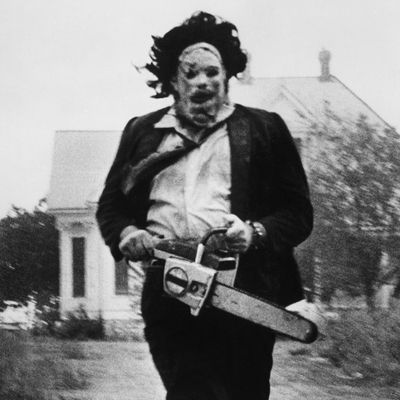
Could the real-life Leatherface please stand up!
— Trigger Warnings: Horror, Murder, Serial Killers —
Whether I am looking for a creepy book to read, a big (or small) budget cinematic thrill, the intense build up of a dark TV series, or an unsettlingly atmospheric video game experience, as a big fan of horror media, part of me is always looking out for that next big scare.
Ultimately, they are fairly easy to find – horror novels, movies, series and games are a dime a dozen and the challenge is usually finding the ones that are actually worth your time.* Often the most effective horror often comes not from the jump-scares and gore, but from the reflection of our own deep-rooted psyches and realities. This is exactly why so many horror films are so subjective or divisive – what it takes to scare one person is completely different to what it takes for another.**
One of the most common tropes in horror is the suggestion that something is ‘based on true events’ or is ‘the true story’ about one thing or another. The found footage sub-genre is entirely rooted in this central conceit, which serves to be simultaneously its biggest strength (especially when people do not realise/choose to ignore that it is fiction) and its greatest downfall (when it becomes just too outlandish or silly – for example with the later Paranormal Activity or Hell House LLC entries).
More often than not, we know that the claims of ‘truth’ in this context are stretching the definition. It’s a trick to make us engage more with a story, and as consumers we willfully buy into it for our own entertainment. And there is nothing wrong with that, its what we pay our hard earned cash for.
But what about when it isn’t? And what about when the truth is actually a whole lot worse?
The original Texas Chainsaw Massacre opens with the text and narration about ‘the tragedy which befell a group of five youths, in particular Sally Hardesty and her invalid brother, Franklin.’ From the get-go it is set up like a ‘true’ story about a group of young people out for an ‘idylic summer afternoon drive’ who come face to face with the ‘mad and macabre’ of real-life horror. When discussing the film in a recent video on my TikTok channel @ahf.horror, I noted that this is exactly why this film is so effective – it creates an atmosphere of ‘this could have happened to you.’
Technically, of course, it couldn’t. The Sawyer family, with iconic chainsaw-wielding killer Leatherface front and centre, isn’t real.
But Ed Gein was.
Born in 1906 and living most of his life in Plainfield Wisconsin, Edward Theodore Gein was also known as the ‘Butcher of Plainfield’ and the ‘Plainfield Ghoul.’ Remaining outside the classification of ‘serial-killer’ on a technicality***, Gein is arguably one of the most horrifying, and certainly amongst the most influential, criminals in US history.
I use the word criminal, rather than killer, quite deliberately as the overal extent of his violent nature is unclear. What is clear, however, is that upon his arrest in 1957 for the murder of Bernice Worden the police found his property full of paraphernalia made from human remains. I won’t go massively into the details, they are easy enough to find out about with a quick google search, but notable among the finds were several human-skin masks and what appear to have been items of clothing. It is generally understood that Gein wanted to make a woman suit that represented his deceased mother.
Sound familiar?
Leatherface, Buffalo Bill, Norman Bates – these are just a few of what is basically a necrophilic smörgåsbord of pop-culture horror ‘icons’ all inspired by Ed Gein and his crimes. Gein is not alone – using Silence of the Lambs alone you can find that Hannibal Lector is likely inspired by combination of killers including serial killers Albert Fish and Andrei Chikatilo, as well as Doctor Alfredo Ballí Treviño whom Thomas Harris met in the 1960s.****
As wild and unlikely as the ultra-violence of Art the Clown, Jason Voorhees or any number of horror villains might be, the fact of the matter is that ultimately these things do happen. People like this do exist and technically anyone can be a victim. All of which is to say that beneath the silver-screen guts and gore, the page-turning thrillers and the pulse-pounding video-game chases, lies a simple fact: the truth is not only stranger than fiction, but also significantly more terrifying.
It could, in fact, happen to you.
(But it probably won’t!)
* I have previously commented on the likes of the Insidious franchise or Midsommar (which I love), as well as horror-action game flops such as Predator: Hunting Grounds.
** Skinamarink is a great example. For some it taps into the child-like state of confusion and abandonment that resonates so deeply for those that might have their own traumas or experiences. But for others it is a slow, confusing, grainy mess of a film in which nothing happens. (I may write a proper review at some point.)
*** Only two murders were explicitly tied to him, meaning that he falls short of the ‘three or more’ that typlically meets the definition of serial killer.
**** You can find out more about the inspiration for Lector on the Wikipedia entry about the character.
 AHF Writes