As some might have guessed from my previous posts, I quite regularly find myself on horror binges. More than that, though, I sometimes actively search for unique and interesting horror – I don’t care whether it is violent, scary, psychological, English-language or anything, I am just always on the hunt. One of the most interesting I have seen is Ari Aster’s Midsommar. It blurs the lines between arthouse horror, disturbing human-condition exploration and cult-based mystery in a beautiful depression and grief-filled, drug-hazey understatement. I absolutely love it and will always recommend it to someone in the market for something different!
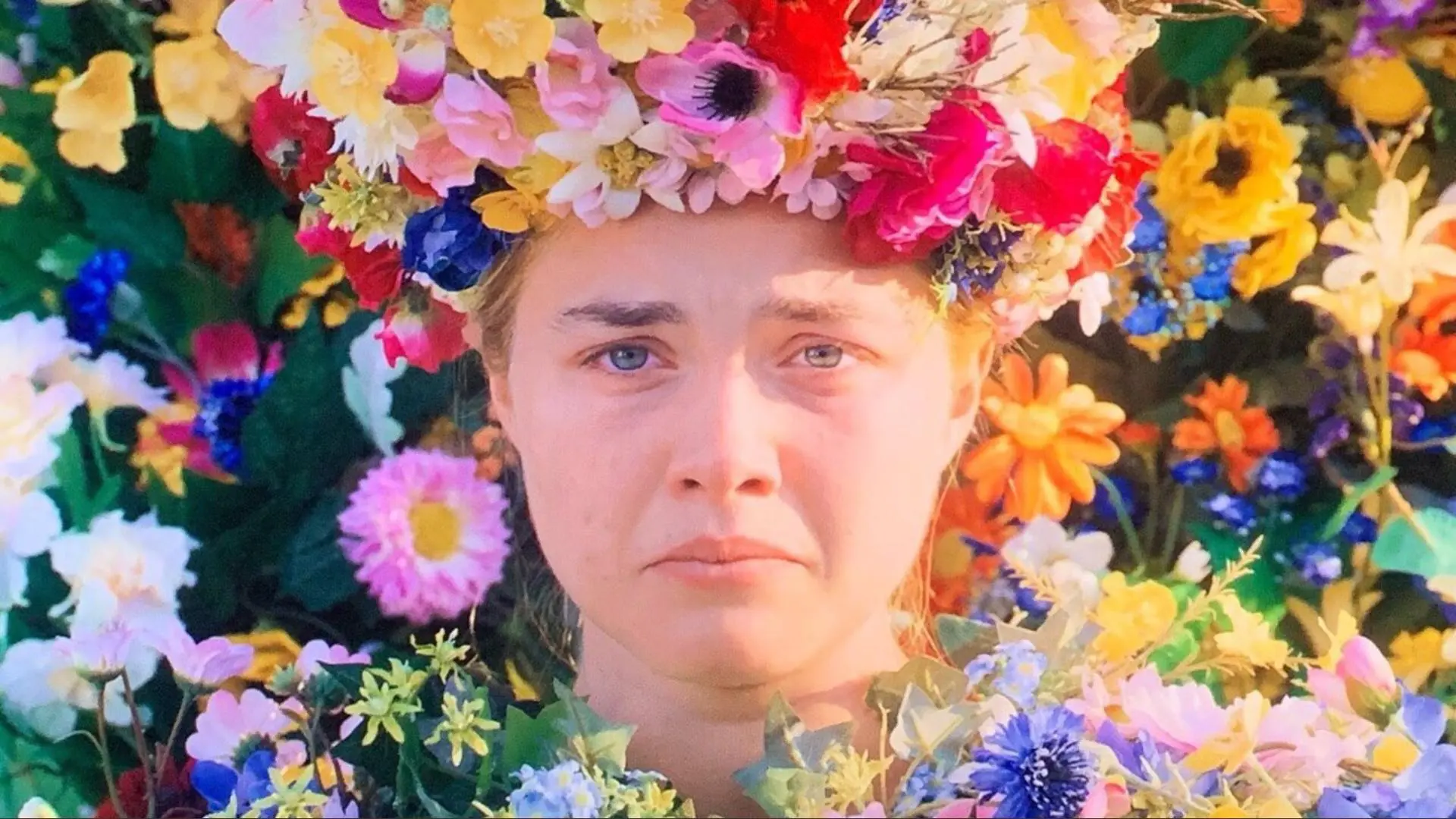
The Tl;Dr Version (No Spoilers)
What an exceptional film – clearly influenced by the likes of the Wicker Man, but yet also unique and with its own distinct flavour. The cinematography and filming is excellent, suitably creepy and unsettling without actually straying too much into unnecessary gore or violence. 9/10. Acting is good, if a little stilted at times because of the writing/nature of the film, Florence Pugh really standing out as a representation of pure grief and despair. 7/10. Being honest and critical, the story is a little convoluted at times, with a few unnecessary additions and filmed sequences that do not really add to the overall whole but rather somewhat unbalance the pacing. 7/10. The ideas and the concepts though are really interesting and the empathy you develop not only towards Pugh’s character, but also towards the cultists themselves is startling. 9/10.
Overall, then, a solid 8/10 and a definite recommendation.
The Detailed Version (Spoiler Alert)
I have a slight confession to make: it has actually been a while since I watched Midsommar and some of the details are a little faded at this point. An excuse to re-watch it you say? Well yes, definitely, except that I currently do not have a spare 2hrs and 20mins! I know to start the detailed version with a negative is perhaps a little unfair to what I think is a great film, but I think it is important to get out of the way before moving to the good bits!
The pacing and runtime of the movie is, to be honest, a little too much. Extended sequences where nothing at all happens, random sub-plots (clearly designed to showcase extra details of the cult) and lingering slow-motion shots sometimes makes the film drag as you wait for the next thing to actually happen. The viewer knows what is about to happen and is left just that little bit too long waiting for it to actually get there.
This is somewhat compounded by the occasional stiltedness of the writing/acting. In fairness to the actors and the film in general, some of this is stylistic rather than a comment on acting skill and ability. As an exploration of grief and descent into… I don’t want to say madness, but certainly letting go of social norms, it works in principle but over the whopping run-time it does begin to trudge along.
Right. I’ve paid dues to the negatives. Now to the positives. Starting with: Florence Pugh. I absolutely adore her – and am totally terrified of crossing her. Since Midsommar she has become something of a household name due to her portrayal of Yelena Belova (the new Black/White Widow of the MCU), but at the time she was just at the beginning of her journey to stardom. This was a perfect choice. It made her more relatable, without the reflection of previous characters in her repertoire, and really helped me with immersion. Her grief and shock, alongside the above-mentioned downward spiral, are tangible and real. Jack Raynor then balances this perfectly with distant and insensitive boyfriend, while Vilhelm Blomgren acts as the bait to lure in the prey. Indeed, Blomgren is so good that you actually forget that he is technically the cause of multiple deaths. Unfortunately the other characters are somewhat more forgettable, and rather than fearing for their deaths the viewer ends up actually rooting for them.
But herein lies the main point – this is not a story about the entitled Americans, but about the community and its victims. Central to the plot is the anthropological oddity that is the Hårga commune, not only for the characters but for the audience as well. I found myself not really caring about anyone other than Dani and the cultists. Intertwined with this, the examination of grief and those left behind by suicide and death – highlighted by the contrast between Dani’s family and the cult – was excellent and provided much of the raw emotion that drives a film such as this. Aster has claimed that the film is a ‘breakup movie’ but for me at least this undersells the setting and background that shape the narrative and, quite frankly, are what makes it work.
You really cannot discuss a film such as Midsommar without drawing some parallels to the Wicker Man and the connection that these two most definitely have – whether they want to or not! The rural, cult-based, pagan, not-quite-horror-and-yet feeling is somewhat unique to these two films – probably because it is actually something that is very difficult to achieve as a filmmaker. In both, cinematography is key to the immersive experience, with stunning vistas and creepy cult goings-on. Yet Wicker Man, famously, was a low-budget mess that later rose to cult excellence with numerous production issues and recuts. Midsommar is clearly in a different league and, while I do think it could have done with a little more editing, it was clearly made with care and love for the craft.
Thing is, folk-horror is a niche that, while receiving something of a comeback in recent years, still sits on the periphery of the horror repertoire. You have to be in the right mood for it. Then, even if you are, you need to be willing to sit with the slow burn. This might be a problem for a viewer looking to sit back, relax and settle in for a scare.
Midsommar does not do this. It makes you think. It makes you question what you would do in that situation. It makes you invest in characters that you least expect. It is tense and scary, but in much the same way that simply being a human being is tense and scary. It excels not in the fear of a ‘big bad’, but in the realisation that being human is hard and sometimes, just sometimes, the idea of moving to a remote location with minimal technology is exactly what we all desire – and who knows what could happen if we got there.
 AHF Writes
One thought on “I Will Never Spend Midsommar in Sweden!”